EITI Strategic Priorities Adopted for 2024–2028
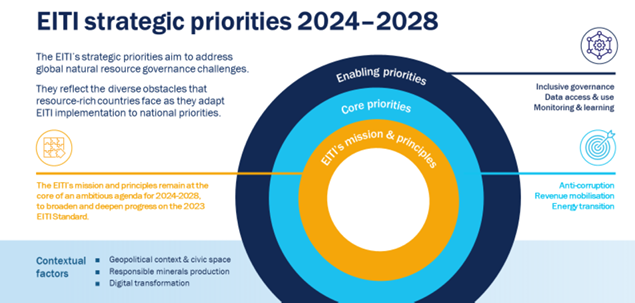
On September 26, 2024, the EITI Board approved the revised strategic priorities for 2024–2028. The document sets out the updated strategic priorities of the EITI, which will guide the work of EITI communities in implementing countries over the next five years. These priorities are:
-
Managing Corruption Risks
A core objective of the EITI is to address corruption risks by disclosing data and providing a platform for dialogue to identify potential avenues for corruption. EITI reporting can serve as a diagnostic tool to identify gaps and weaknesses in systems and policies.
-
Revenue Mobilisation
The contribution of the extractive sector to domestic revenue generation remains a priority for determining national development and public spending priorities. Mobilising resource revenues is crucial for countries seeking to achieve the United Nations Sustainable Development Goals (SDGs). Countries can use the data disclosed under the 2023 EITI Standard to improve revenue mobilisation and oversight.
-
Energy Transition
The energy transition is reshaping extractive industries, presenting both opportunities and challenges for resource-rich countries. Supporting stakeholders in navigating these changes is a core part of the EITI’s mandate. The energy transition affects public finances and economic investment in the extractive sector, introduces new corruption risks, and may lead to new or increased impacts on community livelihoods and the environment. Stakeholders therefore call for the EITI to be used to advance transparency and good governance in the energy sector.
-
Inclusive Governance
The multi-stakeholder governance model is one of the EITI’s key strengths and distinctive features. In a context where the risks of geopolitical conflict and the potential for harassment of stakeholders may increase, inclusive multi-stakeholder governance can help build collaborative and resilient approaches to resource governance.
Based on the recommendations of independent evaluators in 2022, the International Secretariat recommends placing greater emphasis on actively supporting Multi-Stakeholder Groups (MSGs) to strengthen their role in data analysis, policymaking and fostering public debate.
-
Data Accessibility and Use
The EITI’s data strategy aims to promote systematic disclosure systems that provide timely data in ways that meet the needs of stakeholders. This strategy enables broader access to and improved quality of data, thereby contributing to reform and decision-making processes.
-
Monitoring and Learning
Monitoring the EITI’s impact is essential for ensuring the effective allocation of resources in a dynamic context. It can help EITI stakeholders identify which activities are effective in achieving impact and improving outcomes.
Further details on the Board’s decision are available in the EITI Strategic Priorities 2024–2028 document.